
Case study
AllzStore
A multi-tenant commerce platform built for Bangladesh's online sellers — six real storefronts, one admin, and the local logistics work most platforms leave out.
- Sector
- Commerce infrastructure
- Built with
- Next.js, Cloudflare
- Scope
- Storefronts, admin, checkout, AI tooling
The brief
Shopify and WooCommerce weren't built for this market
Most shop owners in Bangladesh start on a Facebook page, and outgrow it fast. The next step is usually Shopify or WooCommerce, and neither fits cleanly: Shopify's app ecosystem assumes payment and delivery partners that don't operate locally, and WooCommerce means someone on staff who can maintain a stack of plugins indefinitely. Parcel booking, cash-on-delivery, and running the storefront in Bangla are all things you'd bolt on afterward, not things the platform was built around.
AllzStore came to us wanting the opposite: a platform that assumed Bangladesh from the first commit, not a global template with local workarounds. We built the storefronts, the admin that runs them, the checkout, and the AI tooling underneath — end to end.
What we built
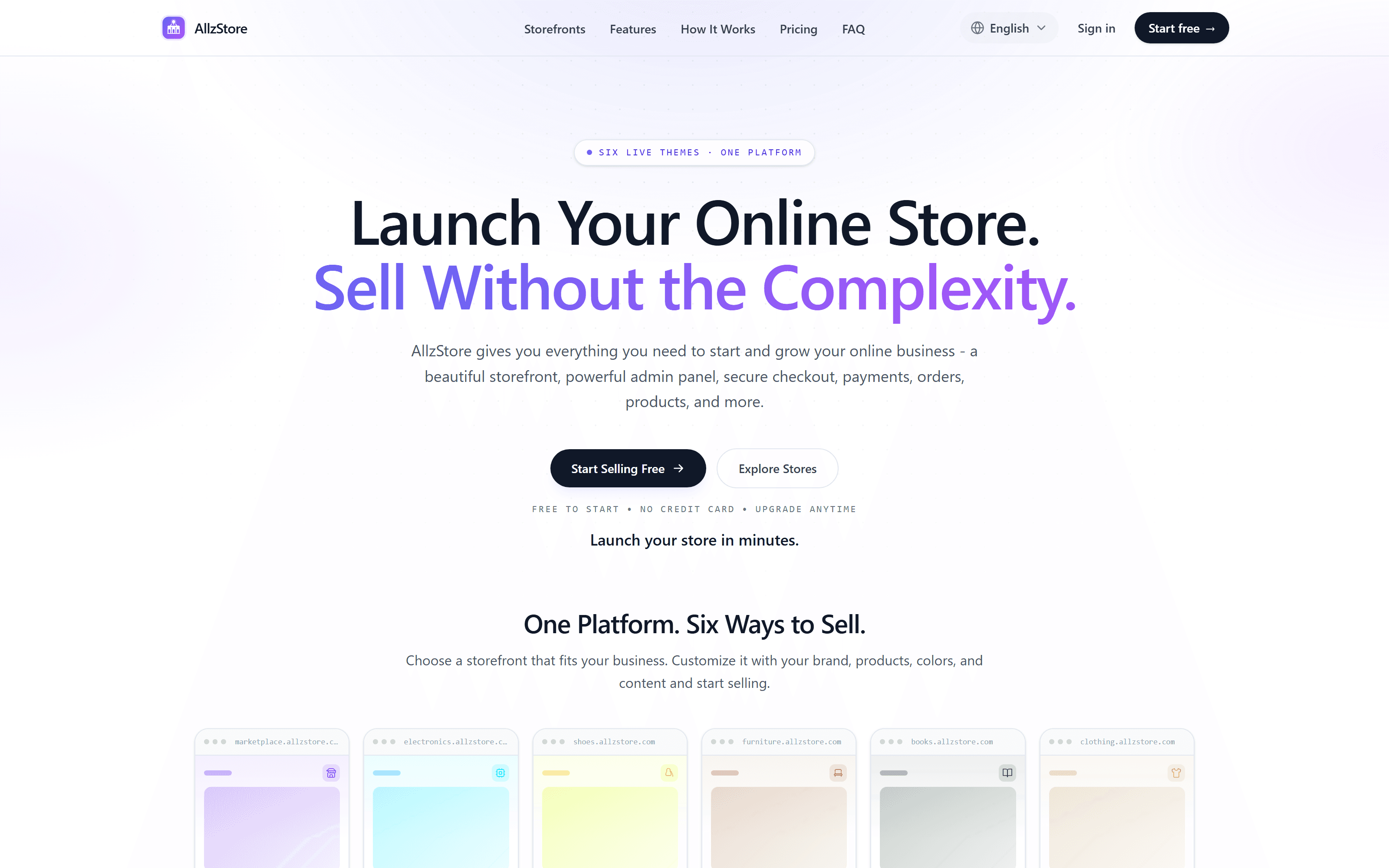
Six storefronts that are actually different
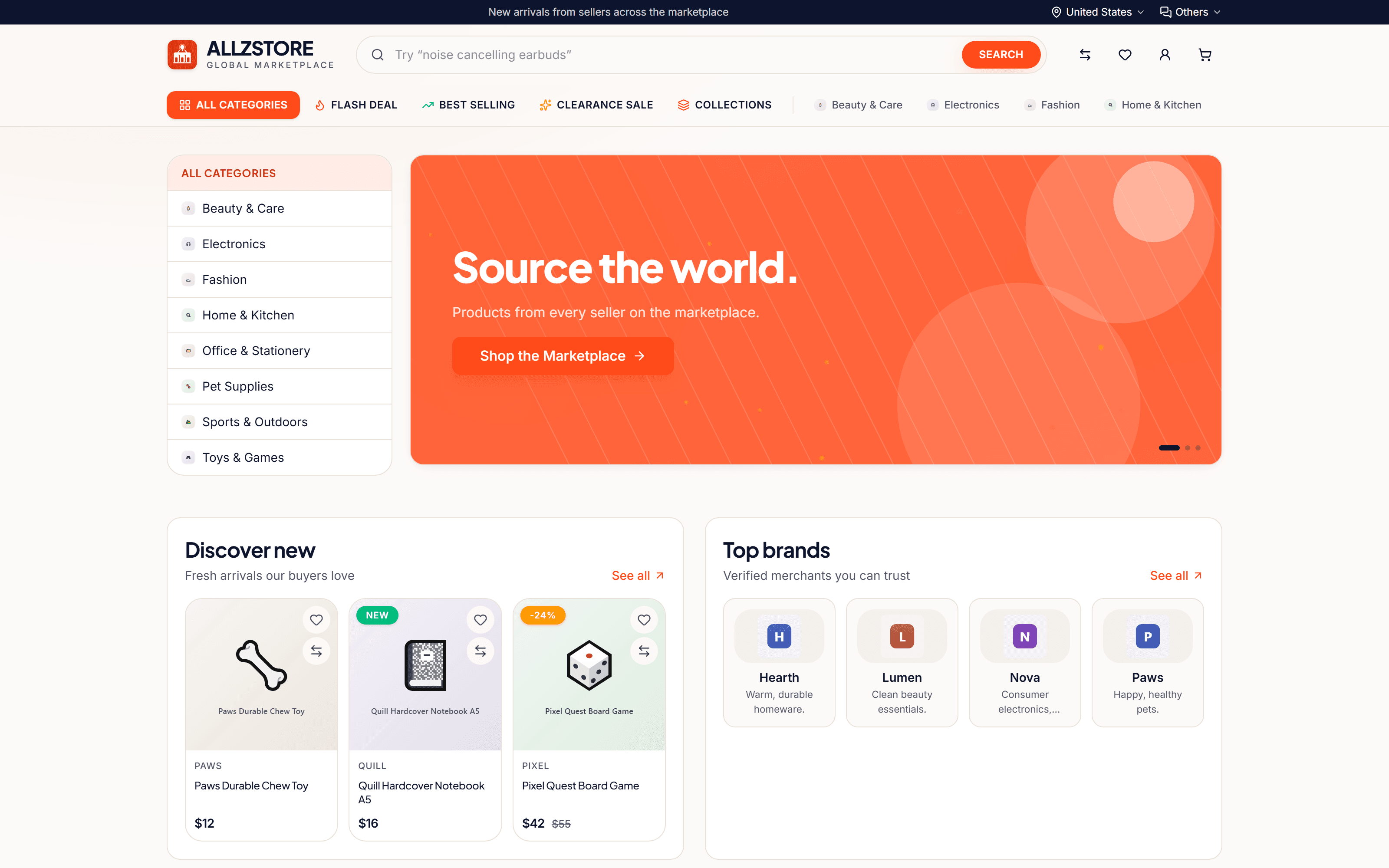
The starting requirement was blunt: six themes, and none of them allowed to be the same layout in a different color. We built Marketplace for multi-vendor sellers with a brand directory and site-wide search, Volt for electronics with spec-sheet comparisons and stock indicators, Stride for footwear and streetwear with quick-add buying and snappier motion, Plane for furniture with a material picker and lead-time badges, Folio for books with series groupings and excerpt previews, and Drape for clothing with an editorial lookbook layout. Every one of them is a working store a merchant can put real products into today, not a screenshot that turns into a dev project once someone signs up.
Checkout, admin, and the local pieces
The parts that don't show up in a theme screenshot
Checkout runs the same way whether a shopper lands on a merchant's own domain or a preview link: card details are tokenized as they're entered, so raw numbers never touch the merchant's servers and PCI scope stays off their plate entirely. One admin dashboard covers every store a merchant runs — products, orders, customers, and inventory — and the same catalog backs the point-of-sale flow, so a sale made in person and one made online don't drift out of sync.
The pieces that mattered most locally were the ones easiest to skip: parcel booking with Pathao, Steadfast, RedX, and eCourier straight from the order screen, and an admin that works fully in Bangla or English rather than an English product with a translated label pass. We also built the AI content layer directly into the product editor — descriptions, SEO titles, and image alt text generated from a merchant's actual product data, not a separate tool they'd have to pay for and paste between.
Engineering notes
Multi-tenant from the first schema, not retrofitted later
Tenant isolation, per-shop branding and domains, and per-shop billing are structural decisions, so we made them before writing the first storefront page rather than after the second merchant asked for it. Every storefront runs on Next.js behind Cloudflare's edge network, which matters more in this market than most — a lot of AllzStore's traffic is on mobile connections where every render-blocking request costs real seconds.
Backups run nightly and get restored and integrity-checked automatically, not just written to disk and assumed fine. That decision came directly from how these stores get used: a data problem is often only noticed days after it happened, once someone reconciles orders, so a backup that hasn't been proven restorable isn't much of a backup.
Where it stands
Live, early, and upfront about the gap
AllzStore is in early access, onboarding merchants a few at a time with direct setup support rather than a self-serve funnel at scale. There's a free plan — one shop, no card, no time limit — and a founding-merchant tier for anyone selling for real who wants the migration and setup done with them.
One decision we'd point to as much as any theme layout: AllzStore's own “choosing a platform” page tells merchants exactly when Shopify or WooCommerce is still the better call — a bigger app ecosystem, bespoke plugin logic AllzStore can't faithfully reproduce, payment processors still rolling out region by region. Most commerce platforms don't publish that page. We think a platform this new earns more trust by being specific about its limits than by staying quiet about them.
Start a project
Building something like this?
We take on a handful of builds at a time so every one of them gets this kind of attention. Tell us what you're trying to ship.