Case study
Talentry
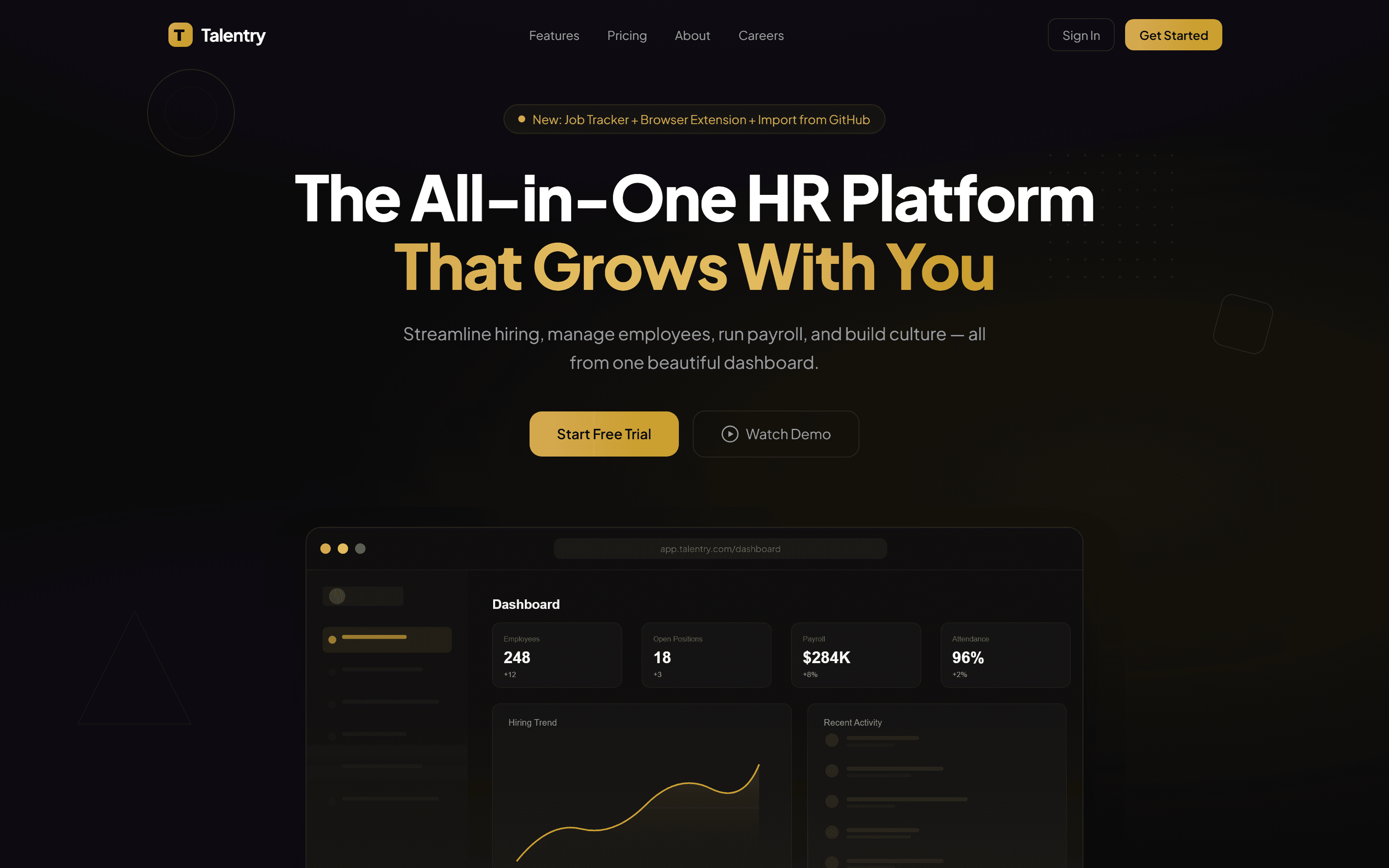
An HR platform for both sides of the hiring table — recruitment, payroll, and performance for the company running it, and a job tracker with AI resume tools for the people applying.
- Sector
- HR technology
- Built with
- Next.js
- Scope
- Recruitment, payroll, performance, interviews, candidate tools
The problem
Most HR software only serves one side of hiring
An applicant tracking system is built for the company doing the hiring. A job-search tracker is built for the person applying to a dozen of those companies at once. A payroll system is built for whoever the company hired six months later, and it's very often a fourth product with none of the first three's data in it. Any single hire crosses all of those roles, and most software picks one and ignores the rest.
Talentry's own line for this is “built for both sides of the hiring table,” and we mean it structurally, not just as a tagline: the same platform runs recruitment, interviews, payroll, and performance for an employer, and separately gives a job seeker a personal tracker and resume tools that have nothing to do with any employer's account. Neither half is a stripped-down add-on to the other.
What we built
The employer side: hiring through to payroll
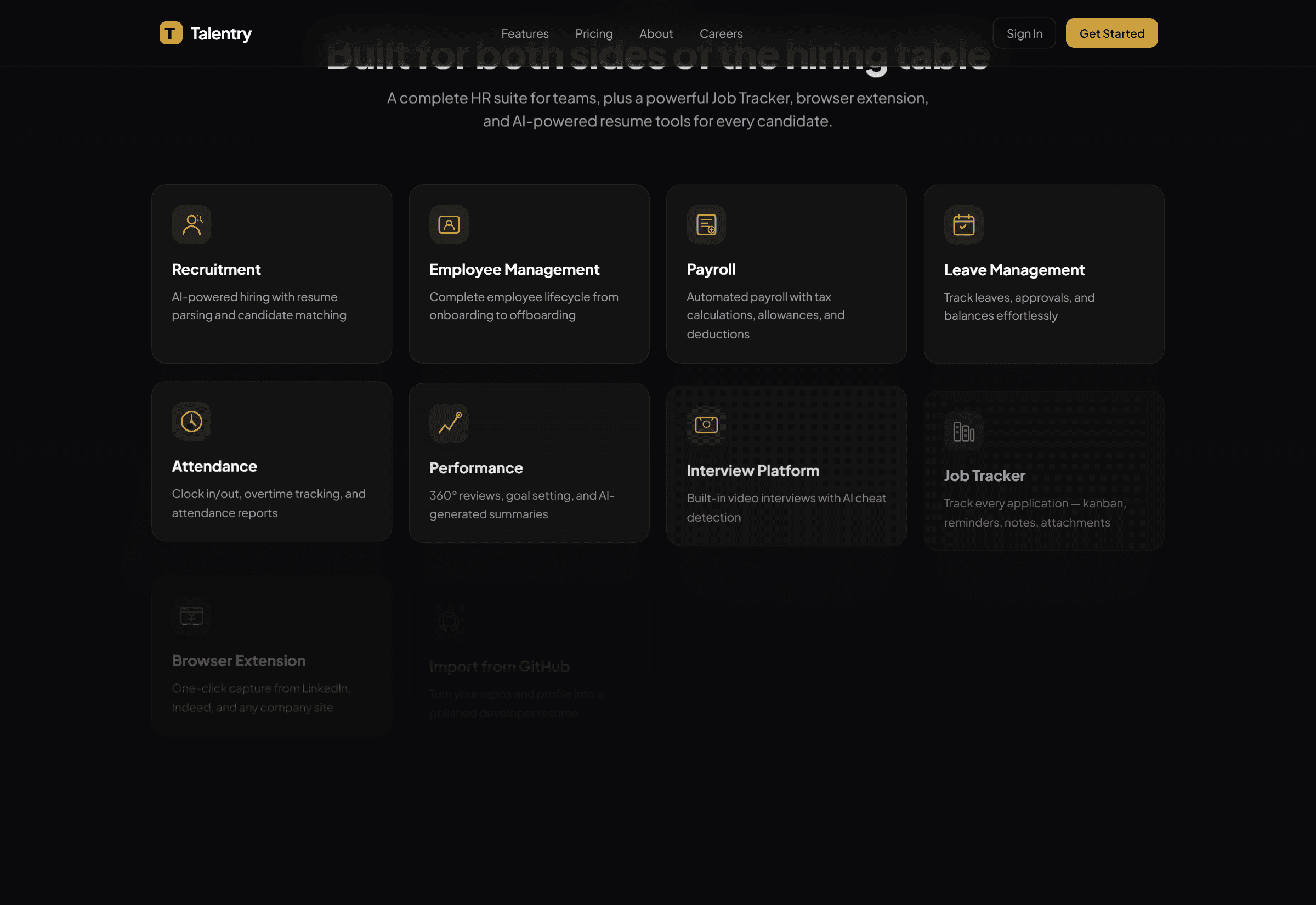
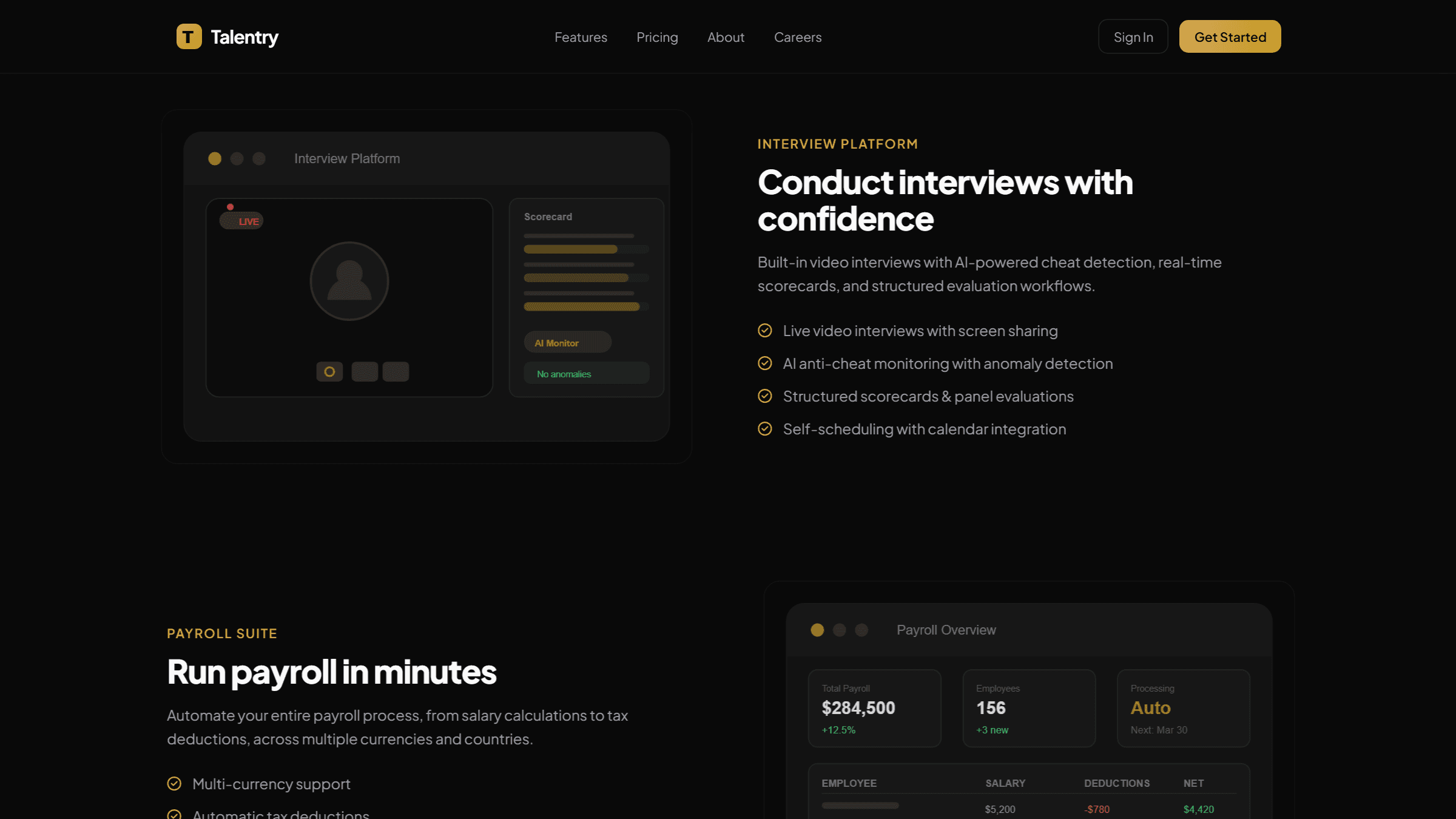
Recruitment runs on resume parsing and candidate matching rather than a bare list of applicants, and interviews happen inside the platform: live video with screen sharing, AI anomaly detection running quietly in the background, structured scorecards for panel evaluations, and self-scheduling tied to the interviewer's calendar so nobody's emailing back and forth to find a slot. Once someone's hired, the same record carries into employee management, and payroll runs off it directly — tax calculations, allowances, and deductions across multiple currencies, with salary revision history kept rather than overwritten, and payslip and salary-certificate templates a company can design themselves, digital signature included.
Leave, attendance, and performance sit on top of the same employee data: configurable leave types with carry-over and documentation rules, clock-in/out with overtime, and 360-degree performance reviews with AI-drafted summaries a manager edits rather than writes from scratch.
The other half
The candidate side: nothing that depends on the employer
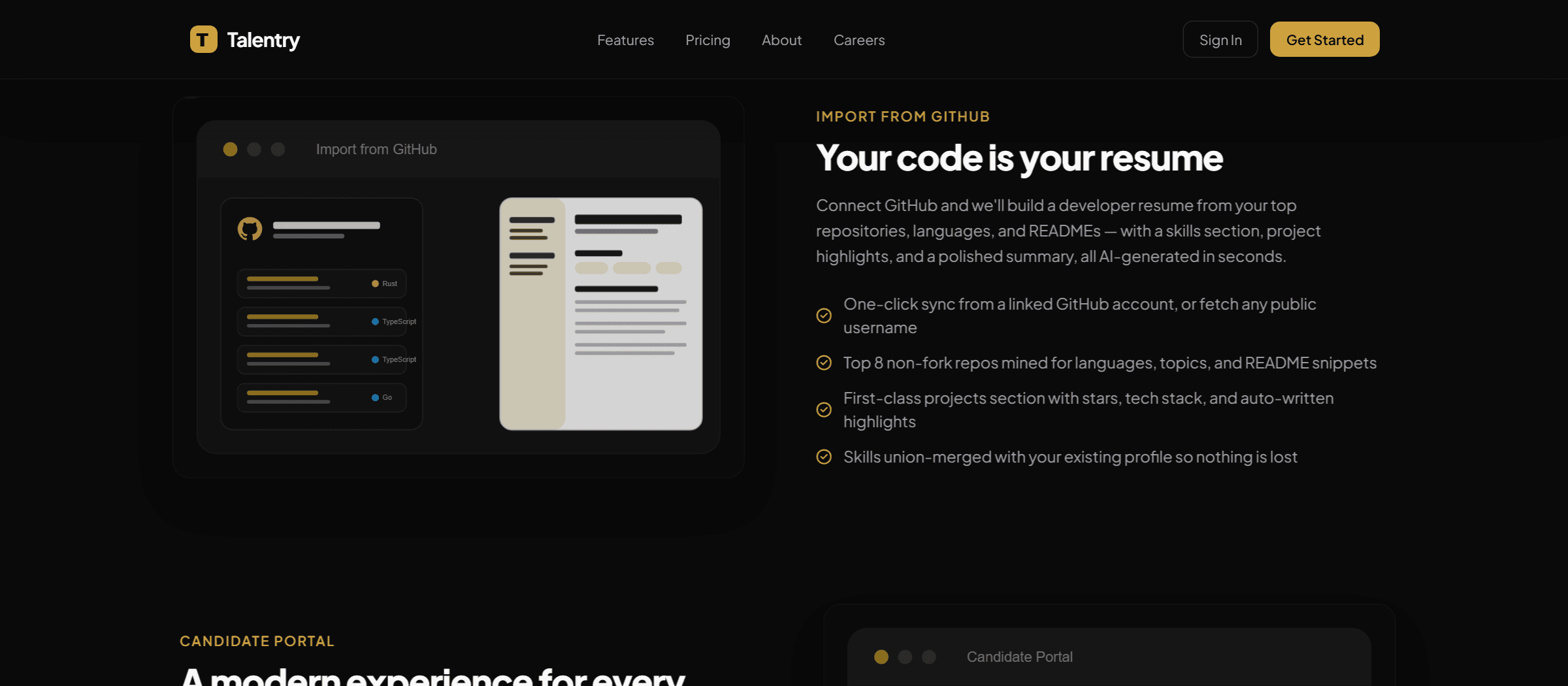
This is the half most HR platforms skip entirely, because it doesn't make them any money directly. A browser extension captures a job post from LinkedIn, Indeed, or any company careers page in one click into a personal kanban tracker — reminders, notes, and attachments live with the application, not scattered across a spreadsheet and a dozen browser tabs. Connecting a GitHub account builds a developer resume from someone's actual repositories: their top eight non-fork repos get mined for languages, topics, and README content, a projects section gets written with real stars and tech stack rather than a generic bullet list, and anything already on their profile gets merged in rather than overwritten.
Engineering notes
One data model, audited properly
Every organization's data is scoped as its own tenant, and role-based permissions gate what any given login can see or change inside it — an interviewer's account and an admin's account are the same login system reading different slices of the same data, not two different products. A company can verify its own domain and send from it directly, with the required DNS records handed back on request instead of a support ticket.
Because payroll and employee records are the kind of data a company genuinely can't afford to get wrong, GDPR tooling isn't an afterthought bolted on for a compliance checkbox: an admin can export or permanently delete everything tied to one person on request, and every action in the system lands in an audit log with a correlation id, so a support question about “what happened to this record” has an actual answer instead of a guess. Sign-in supports email and password, Google, and GitHub OAuth, plus an optional biometric step for anyone who wants one.
Where it stands
Free up to ten employees, priced per seat after that
The Starter plan is free for up to 10 employees with basic recruitment, leave management, attendance tracking, and email support — enough for a small team to run real payroll and hiring without a bill. Professional moves to $12 per employee per month for unlimited employees, AI-assisted recruitment and matching, the full payroll suite, performance reviews, and API access, and Enterprise adds SSO/SAML, a dedicated account manager, custom integrations, and an on-premise option for organizations that need one.
Start a project
Building something like this?
We take on a handful of builds at a time so every one of them gets this kind of attention. Tell us what you're trying to ship.